Business
The Race to Dominate Space
By Katherine Langford
Advertisement · Why this ad?
Marcus manages the day-to-day editorial workflow across all brands, coordinating coverage assignments and ensuring editorial standards are met. He previously served as city editor at the Pioneer Press and holds a degree in Political Science from Carleton College.
More from Marcus →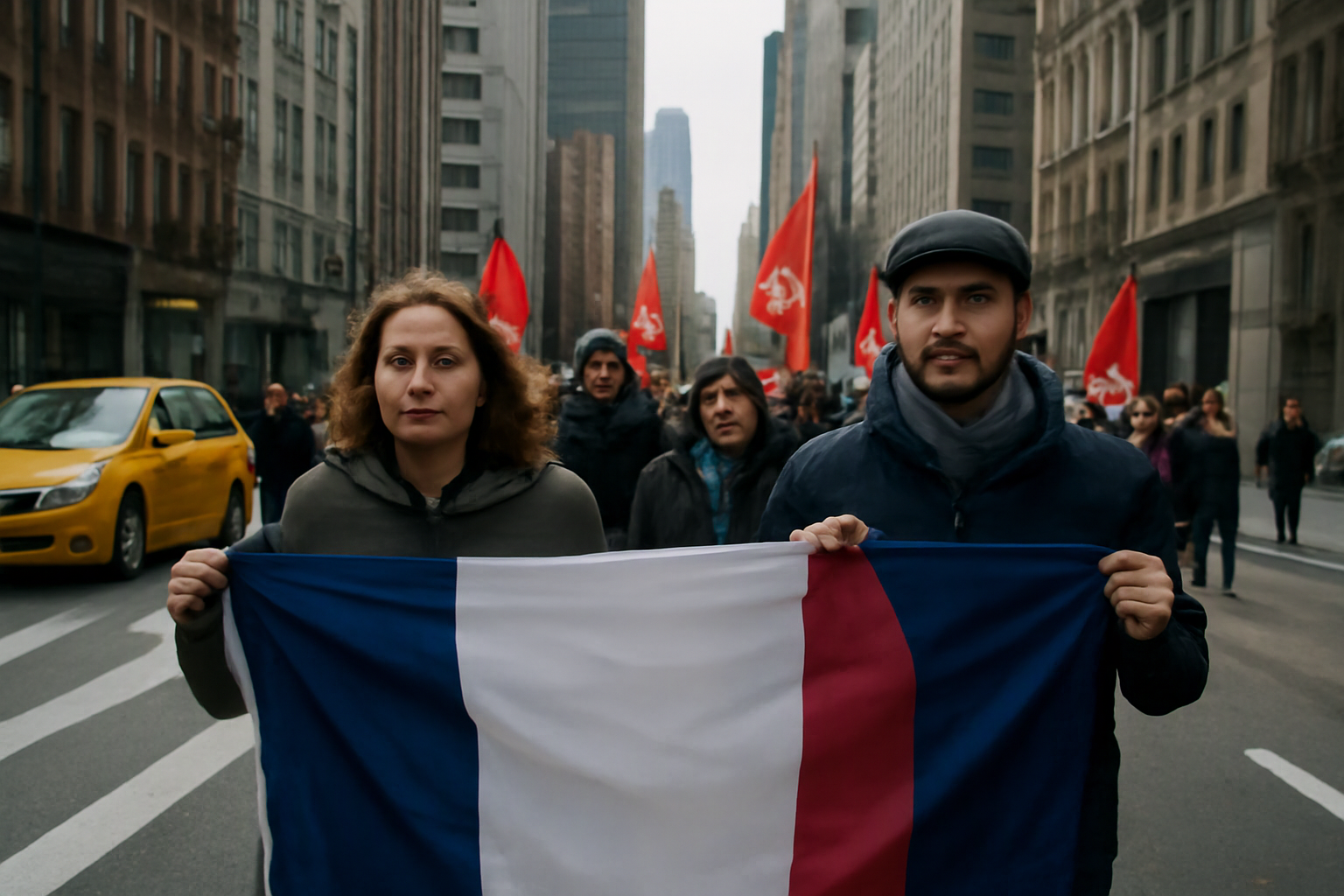
As dawn breaks over Paris, the streets are already buzzing with anticipation. Activists, union members, and ordinary citizens are gearing up for a day of strikes and demonstrations, a scene that has become all too familiar in recent weeks. The air is thick with tension as the nation braces for protests driven by rising living costs and a stalled budget process.
France is currently experiencing a wave of unrest as citizens rally against the increasing cost of living. This comes amid ongoing parliamentary discussions that remain deadlocked over next year's budget. The protests, which have been ongoing for over a month, reflect a growing dissatisfaction with the government's handling of economic issues, particularly as inflation continues to squeeze household budgets.
On the ground, unions have called for widespread participation, urging workers across various sectors to join in solidarity. The strikes are expected to impact public transportation, education, and healthcare, as union leaders emphasize the need for urgent action to address the economic challenges facing everyday French citizens.
The protests are not just a reaction to immediate economic pressures but are also part of a broader discontent with government policies. Many citizens feel that their voices are not being heard in the halls of power, particularly as discussions around the budget have stalled. The cost of essentials like food and energy has surged, prompting many to take to the streets in search of solutions.
As the government grapples with how to balance fiscal responsibility with the needs of its citizens, the situation grows increasingly precarious. The deadlock in parliament highlights the difficulty of reaching a consensus on how to allocate resources in a way that addresses both long-term economic stability and immediate relief for struggling families.
Among those participating in the protests is Marie Dupont, a single mother from Lyon who shared her frustrations. “Every month feels like a struggle. Prices are rising, and my salary isn’t keeping up. I’m here today because I want my government to listen to us,” she said, echoing sentiments felt by many across the nation.
Another protester, Jean-Pierre Moreau, a retired factory worker, added, “We’ve worked hard all our lives, and now we’re being told to tighten our belts even more. This isn’t just about politics; it’s about our families and our futures.” Such personal stories underscore the human impact of economic policies and the urgency of the situation.
The impact of these protests extends beyond the immediate concerns of those participating. Local businesses are bracing for disruptions as strikes threaten to halt commerce. In the heart of Paris, shop owners worry about lost revenue during a crucial shopping season. “We rely on foot traffic, and when there are strikes, people stay home,” said Lucie Martin, who runs a small café near the Champs-Élysées.
Moreover, the demonstrations have sparked discussions in communities about the importance of collective action. Many residents are coming together to support one another, sharing resources and information about local services that can help ease the financial burden. This solidarity is a silver lining in an otherwise challenging situation, showcasing the strength of community ties in times of crisis.
Unions have played a pivotal role in organizing these protests, with major organizations like the General Confederation of Labor (CGT) and the French Democratic Confederation of Labor (CFDT) at the forefront. These groups have a long history of advocating for workers’ rights and social justice, and their involvement is crucial in amplifying the voices of the marginalized. Union leaders have emphasized that the protests are not only about immediate economic relief but also about fighting for a fairer society.
CGT spokesperson, Pierre Lemoine, stated, “Our members are feeling the pressure of rising costs, and it’s our duty to stand with them. We are calling for a government that prioritizes the welfare of its people over profits.” This sentiment resonates deeply with many who feel left behind in the current economic climate.
Looking ahead, the government faces mounting pressure to address the grievances of its citizens. With parliamentary talks stalled, it remains to be seen how leaders will respond to the growing unrest. Analysts suggest that without concrete action, the protests could escalate, leading to more severe disruptions across the country.
As the day of strikes approaches, many are calling for a renewed commitment to dialogue between the government and its citizens. The hope is that through open communication, a path forward can be found that addresses both the immediate concerns of rising costs and the long-term economic health of the nation.
In the meantime, the streets of France will echo with the voices of those demanding change, a reminder that in the face of adversity, the spirit of community and resilience remains strong. As protests continue, many are also exploring alternative avenues for change, such as community forums and local assemblies, where citizens can voice their concerns and propose solutions directly to local leaders.
The implications of these protests extend beyond the immediate economic concerns of the demonstrators. They reflect a growing trend across Europe, where similar sentiments are being echoed in countries like Italy and Spain, where citizens are also grappling with rising costs and stagnant wages. The interconnectedness of the European economy means that the outcomes of these protests could influence policy decisions in neighboring nations, potentially igniting further unrest or inspiring similar movements.
Moreover, the situation in France is a test for President Emmanuel Macron’s administration, which has faced criticism for its handling of economic policies and social welfare programs. Observers are keenly watching how the government will respond to these protests, as failure to act could result in a loss of public trust and support.
As the protests unfold, community leaders and activists are emphasizing the importance of unity among various groups. They are reaching out to marginalized communities, including immigrants and low-income families, to ensure that their voices are included in the conversation. This effort to build a broader coalition is seen as vital for creating lasting change and ensuring that the needs of all citizens are addressed.
In conclusion, the situation in France serves as a poignant reminder of the power of collective action and the importance of listening to the voices of the people. As the nation stands at a crossroads, the outcome of these protests could shape not only the immediate future but also the long-term socio-economic landscape of the country.