Technology
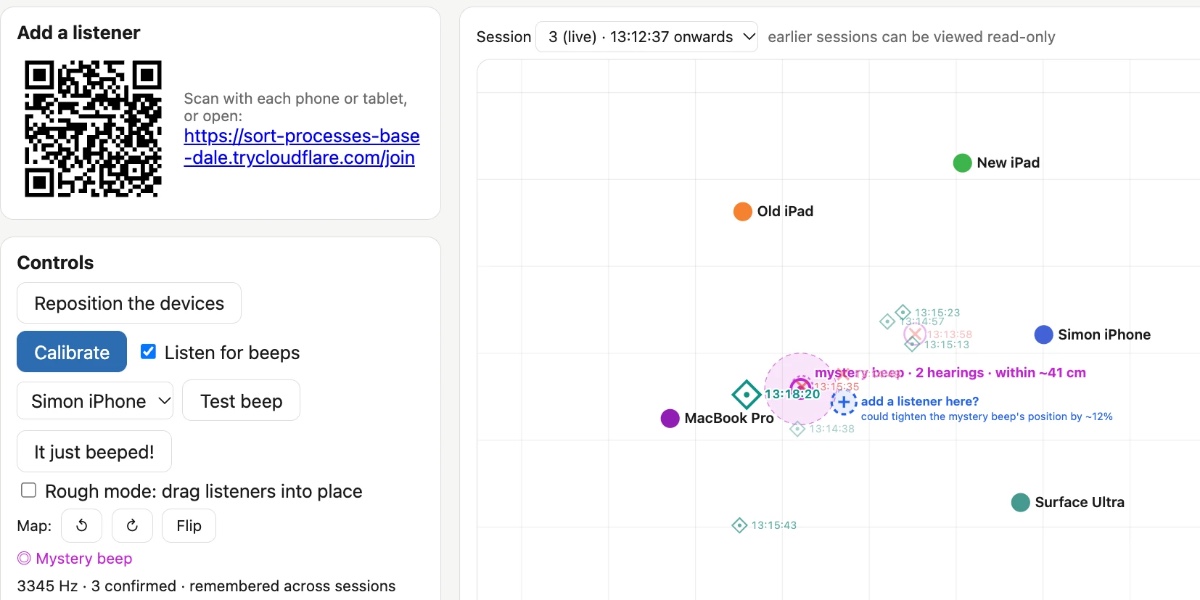
Locating the source of a mysterious beep
By Marcus Chen
Advertisement · Why this ad?
Marcus manages the day-to-day editorial workflow across all brands, coordinating coverage assignments and ensuring editorial standards are met. He previously served as city editor at the Pioneer Press and holds a degree in Political Science from Carleton College.
More from Marcus →
We’ve upgraded Claude Fable and Claude Mythos—models that are designed to tackle the most daunting technical challenges. Claude Fable 5.2 and Claude Mythos 5.2 show improvements in areas like coding, reasoning, and vision. During prerelease testing they’ve helped our engineers complete otherwise-infeasible software migrations, designed three working electronic devices from scratch, solved two open problems in the physics of black holes, made substantial progress on robotics evaluations, and formalized the proof of Fermat’s Last Theorem in 30 hours—among many other applications we’ll discuss below. Claude Fable and Claude Mythos are the same underlying model. Fable has strong cybersecurity and biology safeguards to guard against misuse, which allows us to make it available to all users. Organizations pursuing beneficial applications in cybersecurity or biomedical research can apply for access to Mythos through our recently expanded Life Sciences and Cyber Verification Programs. Testers have found that Fable 5.2 and Mythos 5.2 communicate more clearly than past Fable and Mythos models. They generate outputs up to 30% faster than Claude Fable 5.1 and Claude Mythos 5.1, and they’re available at a lower price: $8 per million input tokens and $40 per million output tokens. Fable 5.2 and Mythos 5.2 also come with an optional fast mode, which speeds up token generation by up to 2.5 times. Fast mode is available for $16 per million input tokens and $80 per million output tokens. Safety and alignment. To help ensure safety and alignment keep step with growing model capabilities, we ran extensive prerelease safety testing on the model that underlies Fable 5.2 and Mythos 5.2. This included developing novel evaluations that give deeper insight into specific concerning behaviors like sandbox escapes. We believe high-stakes risks from misalignment remain low, and the model performed as well as, or better than, our recent models on most alignment measures. Fable 5.2’s cyber and biology safeguards are as robust as those of Fable 5.1 but produce fewer unnecessary blocks, and we have implemented our strongest-ever protections against distillation attacks. We describe more about our safety testing below, and full details can be found in the Claude Fable 5.2 and Mythos 5.2 System Card . When to use Claude Fable 5.2 and Mythos 5.2. Fable and Mythos are best for the most ambitious, open-ended technical work. For most coding and knowledge tasks, we recommend that users start with Claude Opus 5.5, our strongest daily driver, and then switch to a different model as required, depending on the scope and complexity of their work—upward to Fable or Mythos, or downward to Claude Sonnet 5.5 or Claude Haiku 5.5. Fable 5.2 can also play the role of Advisor (where Haiku, Sonnet, or Opus models consult it to help solve harder problems) or Orchestrator (where it delegates simpler tasks to smaller models). Evaluating Claude Fable 5.2 and Mythos 5.2 Benchmark performance. The benchmarks table below shows that Claude Fable 5.2 and Mythos 5.2 are a step above Opus 5.5 in almost all the capabilities we evaluated: Fable 5.2 Fable 5.1 Opus 5.5 GPT-6 Astra Gemini 4 Carbon Agentic coding FrontierCode 2.0 Agentic coding FrontierCode 2.0 49.1% Xhigh effort 32.4% Xhigh effort 45.5% 42.8% 41.1% Medium effort Agentic coding FrontierSWE v2 Agentic coding FrontierSWE v2 69.9% 56.3% 62.3% 65.5% 61.2% Business workflows AutomationBench Business workflows AutomationBench 51.4% 31.4% 42.5% 41.4% 53.9% Agentic scientific research Terminal-Bench-Science 0.1 Agentic scientific research Terminal-Bench-Science 0.1 74.6% 75.3% (Mythos 5.2) 52.6% 58.7% 68.1% 64.8% Cybersecurity CyScenarioBench † Cybersecurity CyScenarioBench † 76.3% Mythos 5.2 61.7% Mythos 5.1 67.6% without safeguards 61% GPT-6 Cyber — Cybersecurity CVE Rediscovery Cybersecurity CVE Rediscovery 89.6% Mythos 5.2 78.3% Mythos 5.1 81.3% without safeguards — — Protein design De novo binder design (24 hr) Protein design De novo binder design (24 hr) 85.1% Mythos 5.2 79.1% Mythos 5.1 82.6% without safeguards — — Agentic search WANDR (relaxed score) Agentic search WANDR (relaxed score) 82.1% 68.7% 72.3% — — Computer use OSWorld 2.1 (offline set, partial) Computer use OSWorld 2.1 (offline set, partial) 89.3% 83.5% 87.2% 79.5% 81.5% Robotics RoboDojo Sim ‡ Robotics RoboDojo Sim ‡ 64.9% 27.6% 39.4% 29.8% — Knowledge work AA-Briefcase v1.1 Knowledge work AA-Briefcase v1.1 66.1% rubric 61.5% rubric 61.2% rubric 52.0% rubric 61.8% rubric 1785 Elo 1669 Elo 1800 Elo 1569 Elo 1611 Elo Knowledge work Remote Labor Index (RLI) Knowledge work Remote Labor Index (RLI) 41.3% High effort 17.9% 21.3% 20.8% — Multidisciplinary reasoning Humanity’s Last Exam (with tools) Multidisciplinary reasoning Humanity’s Last Exam (with tools) 74.2% 65.6% 67.7% 57.2% — Visual chart recognition Chartography (no tools) Visual chart recognition Chartography (no tools) 73.4% 44.8% 64.4% 71.0% 72.5% Effort and efficiency. On Medium effort (the default in Claude apps and Claude Code), Fable 5.2 can accomplish challenging tasks with fewer tokens than Fable 5.1. In early testing on the FrontierCode 2.0 evaluation, Fable 5.2 at High effort scored about level with Opus 5.5 at Max effort, for roughly half the cost per task. At Xhigh effort, it also scored the highest of any released model tested. Agentic coding: FrontierCode 2.0 Agentic search: WANDR Hardware engineering: BenchCAD 2.1 Multidisciplinary reasoning: Humanity’s Last Exam Visual chart recognition: Chartography Agentic coding: FrontierCode 2.0 Agentic search: WANDR Hardware engineering: BenchCAD 2.1 Multidisciplinary reasoning: Humanity’s Last Exam Visual chart recognition: Chartography Fable 5.2 Opus 5.5 Fable 5.1 GPT-6 Astra Gemini 4 Carbon 10 20 30 40 50 0 Score (%) 1 2 5 10 20 50 Cost per task (USD, log scale) Low Med High Xhigh Max FrontierCode measures whether a model’s code changes would be merged by the maintainers of open-source repositories. At High effort, Fable 5.2 scores about the same as Opus 5.5’s best score (45.3% vs. 45.5%) for roughly half the cost per task, and ahead of GPT-6 Astra’s best score (42.8%) at about the same cost. At Xhigh effort, Fable 5.2 reaches 49.1%, the highest score of any released model we’ve tested. Fable 5.2 Opus 5.5 Fable 5.1 30 40 50 60 70 80 90 0 Score (%) 1 2 5 10 20 50 Cost per attempt (USD, log scale) Low Med High Xhigh Max Perplexity’s WANDR benchmark measures agents on large data-collection tasks. At Medium effort, Fable 5.2 matches Opus 5.5’s top score for about 40% of the cost per task. Fable 5.2 Opus 5.5 Fable 5.1 0 20 40 60 80 Score (0–100) 0.03 0.10 0.30 1 3 10 30 Cost per attempt (USD, log scale) Low Med High Xhigh Max BenchCAD 2.1 measures hardware engineering, specifically how closely a model’s designs match reference geometry and circuits, and is scored 0–100 with partial credit. At Max effort, Fable 5.2 scores 83.5, ahead of Opus 5.5 (65.3) and Fable 5.1 (44.4). Fable 5.2 Opus 5.5 Fable 5.1 50 60 70 80 0 Score (%) 0.10 0.20 0.50 1 2 5 Cost per attempt (USD, log scale) GPT-6 Astra (Max): 57.2% Low Med High Xhigh Max Humanity’s Last Exam (HLE) is a test of expert-level academic knowledge and reasoning. At Low effort, Fable 5.2 matches Opus 5.5’s top score for less than one-tenth of the cost per task. Fable 5.2 Opus 5.5 Fable 5.1 30 40 50 60 70 80 0 Score (%) 0.02 0.05 0.10 0.20 0.50 1 Cost per attempt (USD, log scale) GPT-6 Astra (Max): 71.0% Gemini 4 Carbon: 72.5% Low Med High Xhigh Max Chartography tests how accurately a model can read charts and figures. At Medium effort, Fable 5.2 scores 66.4%, ahead of Opus 5.5 at Max effort (64.4%) for less than one-tenth